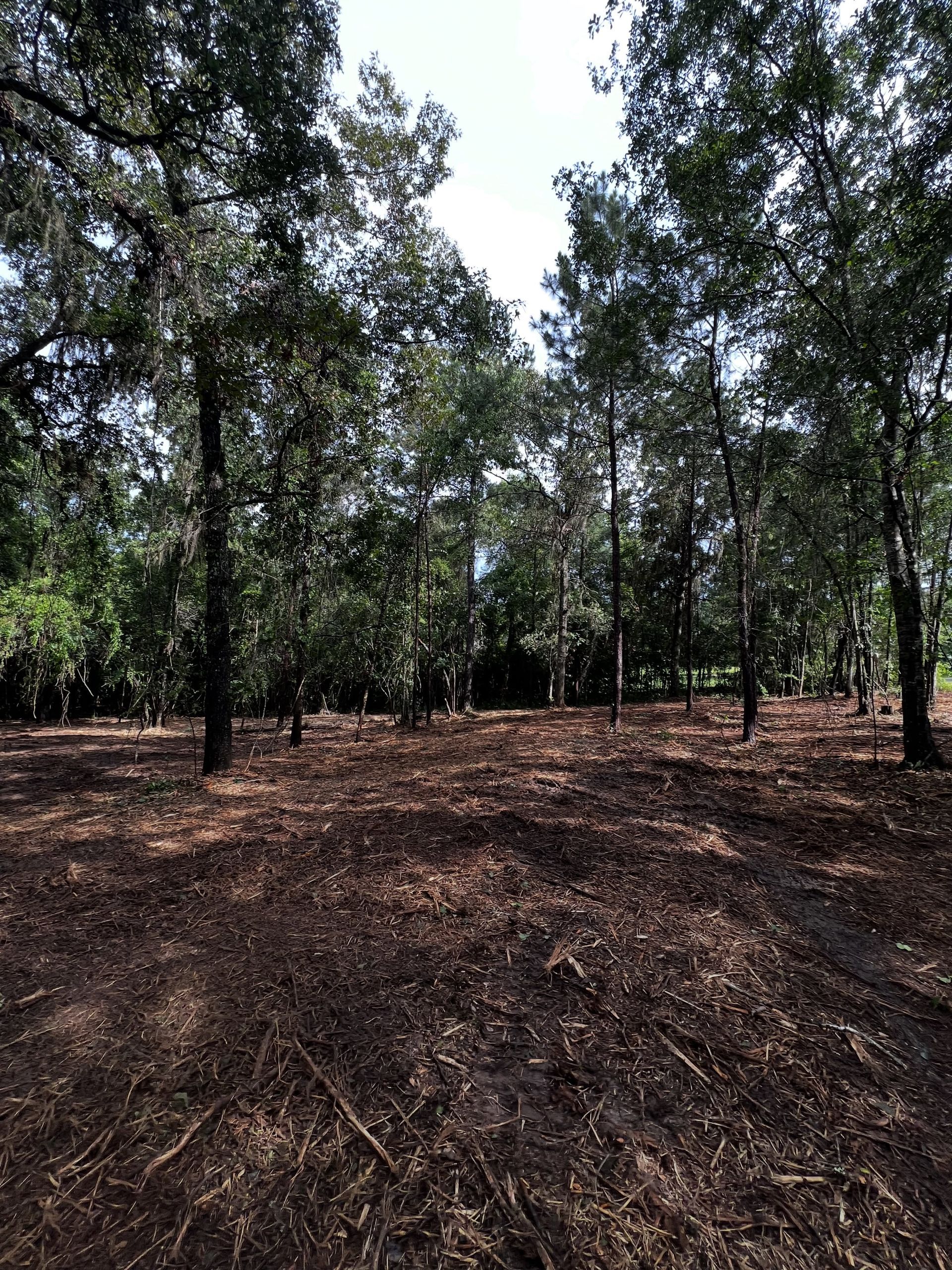
Fields Maintained for Accessibility and Control
Bush Hogging in Tallahassee for overgrown pastures, undeveloped lots, and properties with tall grass and brush
Tall grass, saplings, and woody brush reclaim open fields quickly in North Florida's warm, wet climate. Bush hogging cuts through dense vegetation using heavy-duty rotary mowers that handle material too thick for standard lawn equipment. Rowdy Forestry LLC provides bush hogging for residential lots, farms, hunting land, and commercial properties across Tallahassee, maintaining fields that would otherwise become impassable within a single growing season.
The process mows down vegetation in wide passes, cutting stalks close to the ground and chopping material into smaller pieces that decompose faster. Properties used for livestock, equipment storage, or seasonal hunting benefit from routine cutting that prevents hardwood saplings from establishing root systems and keeps sight lines open across large acreage.
Schedule recurring maintenance visits or one-time service depending on how quickly vegetation returns to your property.
How Bush Hogging Addresses Overgrowth
Bush hogs use thick steel blades that spin horizontally beneath the mower deck, cutting through saplings up to two inches in diameter and laying down tall grass without clogging. The equipment handles uneven terrain, hidden stumps, and debris that would damage lighter mowers, making it effective for properties that haven't been maintained recently or contain mixed vegetation types.
After mowing, you notice immediate improvement in visibility, easier movement across the property, and reduced habitat for snakes and pests that shelter in tall grass. Pastures become usable for grazing again, fire breaks regain their effectiveness, and property boundaries that disappeared under brush are clearly visible. Regular mowing prevents woody plants from maturing into trees that require more aggressive clearing methods.
Bush hogging works best when scheduled before vegetation reaches waist height or woody stems thicken beyond the equipment's cutting capacity. Agricultural clients often mow seasonally to maintain pasture quality, while hunting properties typically cut in late summer to improve visibility before fall season opens.
Answers to Frequent Service Questions
Property owners across Leon County, Wakulla County, and Madison County often ask about maintenance timing and what bush hogging can handle.
What vegetation does bush hogging cut?
The equipment handles tall grass, weeds, brush, briars, and saplings up to two inches thick, along with mixed growth that includes both herbaceous and woody plants.
How often should properties be mowed?
Most properties in the Tallahassee area need mowing one to three times per year depending on rainfall, soil fertility, and how quickly woody species invade open fields.
When is the best time to schedule bush hogging?
Mowing works best in late spring or early summer before vegetation fully matures, and again in late summer if regrowth is heavy, avoiding wet periods when equipment causes soil compaction.
What's the difference between bush hogging and forestry mulching?
Bush hogging cuts vegetation at ground level and leaves stalks lying on the surface, while forestry mulching grinds material into fine chips that decompose faster and suppress regrowth more effectively.
Can bush hogging handle properties with hidden obstacles?
The equipment tolerates stumps, rocks, and uneven ground better than standard mowers, but large obstacles should be flagged beforehand to avoid blade damage and ensure safe operation.
Rowdy Forestry LLC provides bush hogging for farms, hunting land, residential acreage, and commercial sites throughout the region. Arrange a property visit to determine mowing frequency and discuss whether recurring service fits your maintenance goals.