
Ground Ready Before Construction Begins
Site Prep in Tallahassee for building sites that require grading, clearing, and stable foundation areas
Construction projects depend on properly prepared ground that drains correctly, supports equipment weight, and provides a level surface for foundations. Site preparation addresses these requirements after land clearing removes vegetation but before any building begins. Rowdy Forestry LLC handles site prep across Tallahassee and surrounding North Florida communities, grading soil, correcting drainage problems, and creating stable building pads for homes, shops, barns, and commercial structures.
The work involves grading the cleared area to establish proper slope, compacting soil to prevent settling under structural loads, and shaping drainage paths so water moves away from foundations. Site prep often coordinates with land clearing and driveway installation to complete all groundwork phases in sequence before construction crews mobilize.
Schedule a free estimate before beginning construction to review soil conditions, drainage needs, and grading requirements specific to your building plan.
What Proper Site Prep Requires
Preparing a building site involves cutting high spots, filling low areas, and compacting layers of fill material to create a uniform surface that won't shift under building loads. Equipment operators check grade with laser levels to confirm the pad slopes away from the structure location at the correct angle, typically one to two percent fall to prevent water from pooling near foundations. Compaction happens in lifts—thin layers of soil that are individually compressed before the next layer is added—to avoid future settling that cracks slabs or shifts footings.
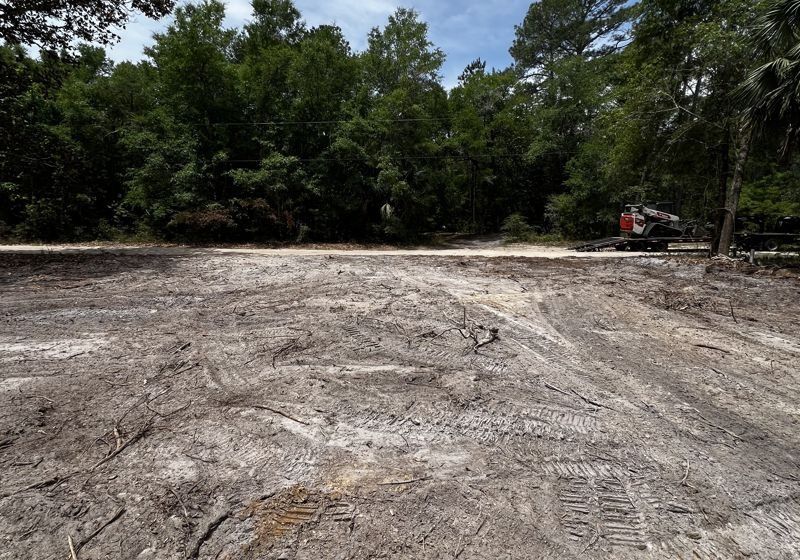
When site prep finishes, you see a level pad with defined edges, visible drainage swales that direct runoff toward designated outlets, and compacted soil firm enough to support heavy vehicles without rutting. Construction equipment can move onto the site without creating mud pits, surveyors can set accurate elevations for footings, and builders know the ground won't settle unevenly under the structure's weight.
Sites with poor drainage or high water tables may require additional fill material, French drains, or retention areas to manage stormwater. Sandy soils common in North Florida drain quickly but compact less effectively, while clay subsoils hold water longer and require careful grading to prevent standing water near buildings.
Questions Before Starting Your Project
Builders and property owners preparing for construction often ask about the site prep process and how it affects project timelines.
What happens during site preparation?
The process includes grading to establish correct slopes, compacting soil to prevent settling, shaping drainage paths, and creating a stable pad at the elevation required by the building plan.
How does site prep coordinate with land clearing?
Land clearing removes all vegetation and debris first, then site prep shapes and grades the bare soil to meet construction specifications.
When should driveways be installed relative to site prep?
Driveways typically install after the building pad is finished but before heavy construction traffic begins, providing stable access that prevents the pad from being damaged by repeated equipment passes.
What soil conditions in Tallahassee affect site preparation?
The region's sandy loam drains quickly but requires more compaction effort to achieve stable density, while clay layers hold moisture and need careful grading to move water away from structures.
How does proper site prep improve construction efficiency?
Correct grading and compaction let builders start work immediately without delays from standing water, soft soil, or elevation errors that require rework before footings can be poured.
Rowdy Forestry LLC prepares sites for residential, agricultural, and commercial construction projects throughout the region. Request a customized estimate to review your building location, discuss grading needs, and coordinate site prep with your construction schedule.